Creating a beautiful aquarium doesn’t have to be expensive. With a little creativity, you can make stunning and fish-safe DIY aquarium decorations from household items. Not only does this save money, but it also allows you to personalize your tank in a unique way.
In this SEO-optimized guide, you’ll learn how to safely use common household materials to build decorations, what items are safe, and what to avoid.
💡 Why Use DIY Aquarium Decorations?
DIY decorations are perfect for budget aquarium setups because they:
✔ Reduce costs significantly
✔ Allow customization of your aquascape
✔ Reuse household items (eco-friendly)
✔ Add hiding spots for fish
✔ Enhance the natural look of your tank
However, safety is the most important factor when using homemade materials.
⚠️ Important Safety Rules Before You Start
Before adding anything to your aquarium:
✔ Avoid painted or chemically treated materials
✔ Make sure items are non-toxic and aquarium-safe
✔ Wash thoroughly with warm water (no soap)
✔ Soak items to remove residues
✔ Avoid sharp edges that can injure fish
✔ Never use metal objects that may rust
🏠 Best Household Items for DIY Aquarium Decorations
Here are some safe and commonly used materials:
1. Natural Rocks
You can collect smooth stones from nature.
Uses:
Cave structures
Stackable rock formations
Natural aquascapes
💡 Tip: Test rocks by pouring vinegar on them—if it fizzes, avoid using them.
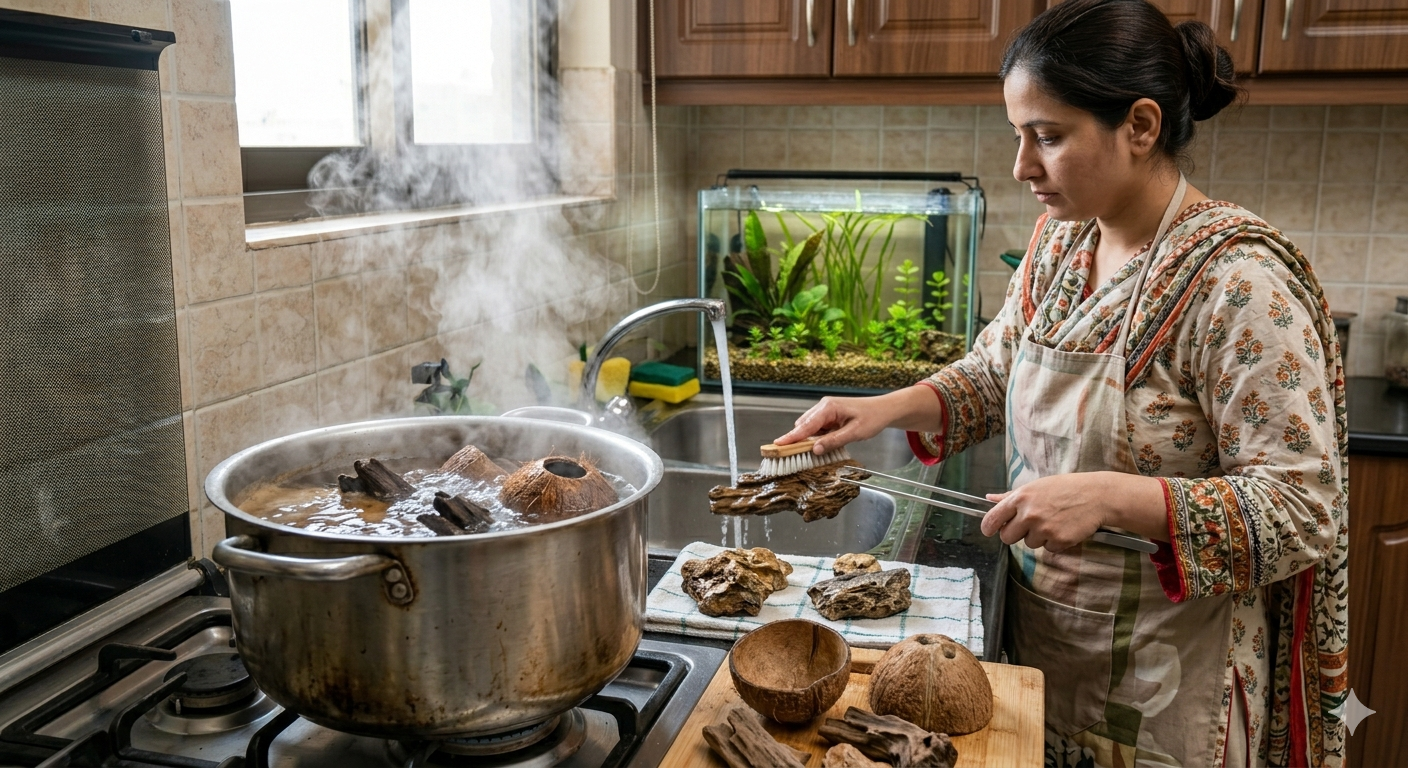
2. Driftwood (Boiled and Cleaned)
Driftwood creates a natural environment and can be collected or purchased cheaply.
Benefits:
Provides hiding places
Supports plant attachment
Releases beneficial tannins
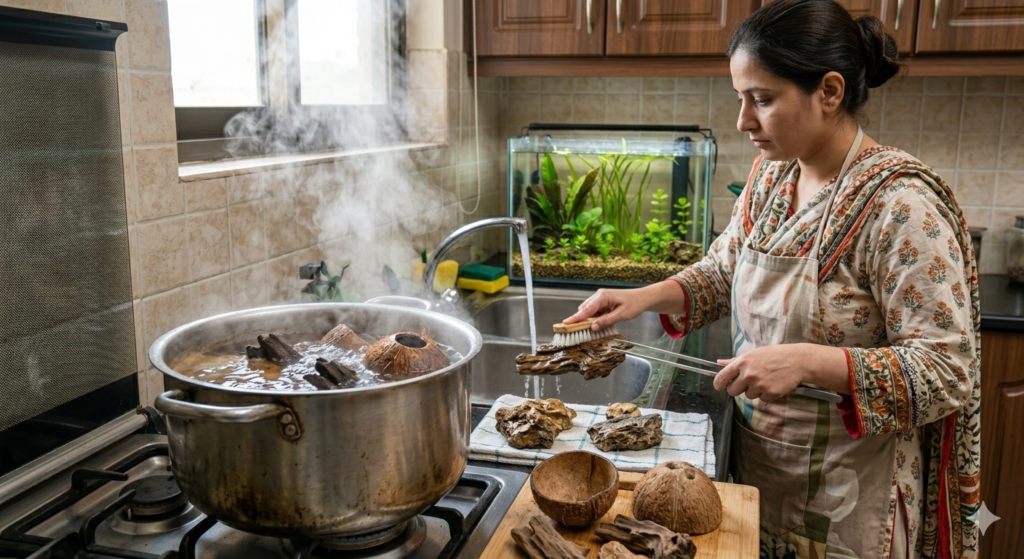
💡 Always boil driftwood before use to remove bacteria and toxins.
3. Clay Pots and Ceramics (Unglazed)
Small clay pots can be turned into caves or shelters.
Uses:
Fish hiding spots
Breeding caves
Aquascaping elements
💡 Ensure they are unpainted and aquarium-safe.
4. PVC Pipes
Simple PVC pipes from hardware stores can be transformed into tunnels.
Advantages:
Cheap and durable
Easy to cut and customize
Perfect for hiding spots
💡 Smooth edges before placing in the tank.
5. Coconut Shells
Half coconut shells make excellent natural-looking caves.
Benefits:
Safe when cleaned properly
Natural aesthetic
Great for shrimp and small fish
💡 Boil and clean thoroughly before use.
6. Glass Jars and Bottles (Modified)
Clear glass containers can be repurposed as decorative elements.
Uses:
Mini planted sections
Fish shelters
Unique aquascaping designs
💡 Remove labels and sharp edges carefully.
7. Natural Wood Sticks (Untreated)
Small branches can be used as decor if properly cleaned.
Important:
Use only untreated, pesticide-free wood
Boil and soak before adding to tank
Avoid soft or rotting wood
🛠️ How to Prepare Household Items for Aquarium Use
Follow these steps to make your DIY decorations safe:
Clean Thoroughly Rinse items with warm water (no soap or detergent).
Boil or Soak Boiling helps kill bacteria and remove impurities.
Check for Chemicals Ensure items are free from paint, glue, or coatings.
Test Before Adding Fish Place items in water for 24–48 hours to check for leaks or contamination.
❌ Materials to Avoid
Never use the following in your aquarium:
Painted or coated plastics
Treated or varnished wood
Metal objects (can rust and harm fish)
Soap-cleaned items with residue
Toxic plastics or unknown materials
Sharp broken glass or ceramics
🎯 Creative DIY Decoration Ideas
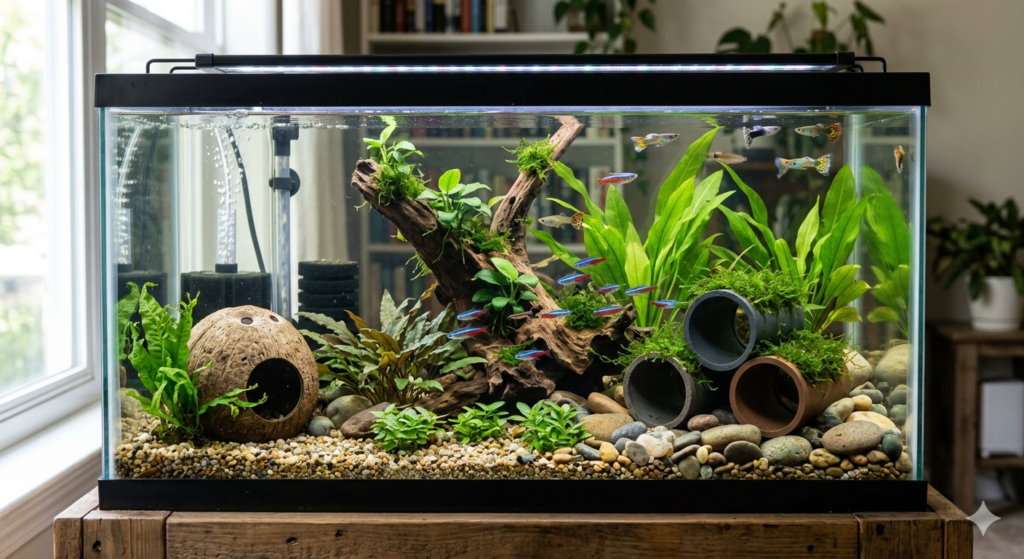
Build a rock cave using stacked stones
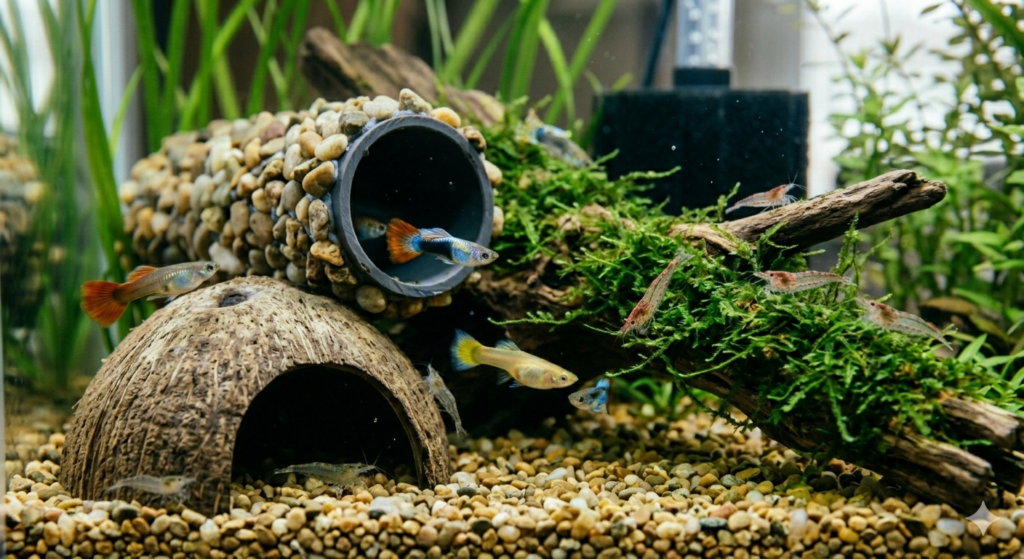
Create tunnels using PVC pipes hidden with substrate
Use coconut shells as shrimp shelters
Combine driftwood with moss for a natural aquascape
Use glass jars as planted micro-environments
🌟 Benefits of DIY Aquarium Decor
Budget-friendly
Environmentally friendly
Fully customizable
Safe when prepared properly
Enhances fish comfort and behavior
🧠 Final Thoughts
DIY aquarium decorations from household items are a great way to design a beautiful and functional tank without spending much money. By carefully selecting safe materials and preparing them properly, you can create a unique aquascape that is both visually appealing and safe for your fish.
Always prioritize safety, cleanliness, and non-toxic materials to ensure your aquarium remains a healthy environment.
 1
1