Popular Posts

How to Cycle a New Aquarium for Free — No Chemicals Needed

Intro:

Cycling a new aquarium is one of the most important steps in fishkeeping. Without proper cycling, harmful toxins can build up in the water and harm or even kill your fish. The good news is that you can cycle an aquarium for free and without any chemicals using natural methods.

In this beginner-friendly SEO guide, you’ll learn exactly how to cycle your aquarium safely using simple, cost-free techniques.


💡 What Does “Cycling an Aquarium” Mean?

Cycling an aquarium refers to the process of establishing beneficial bacteria in your tank. These bacteria help convert harmful substances into safer ones.

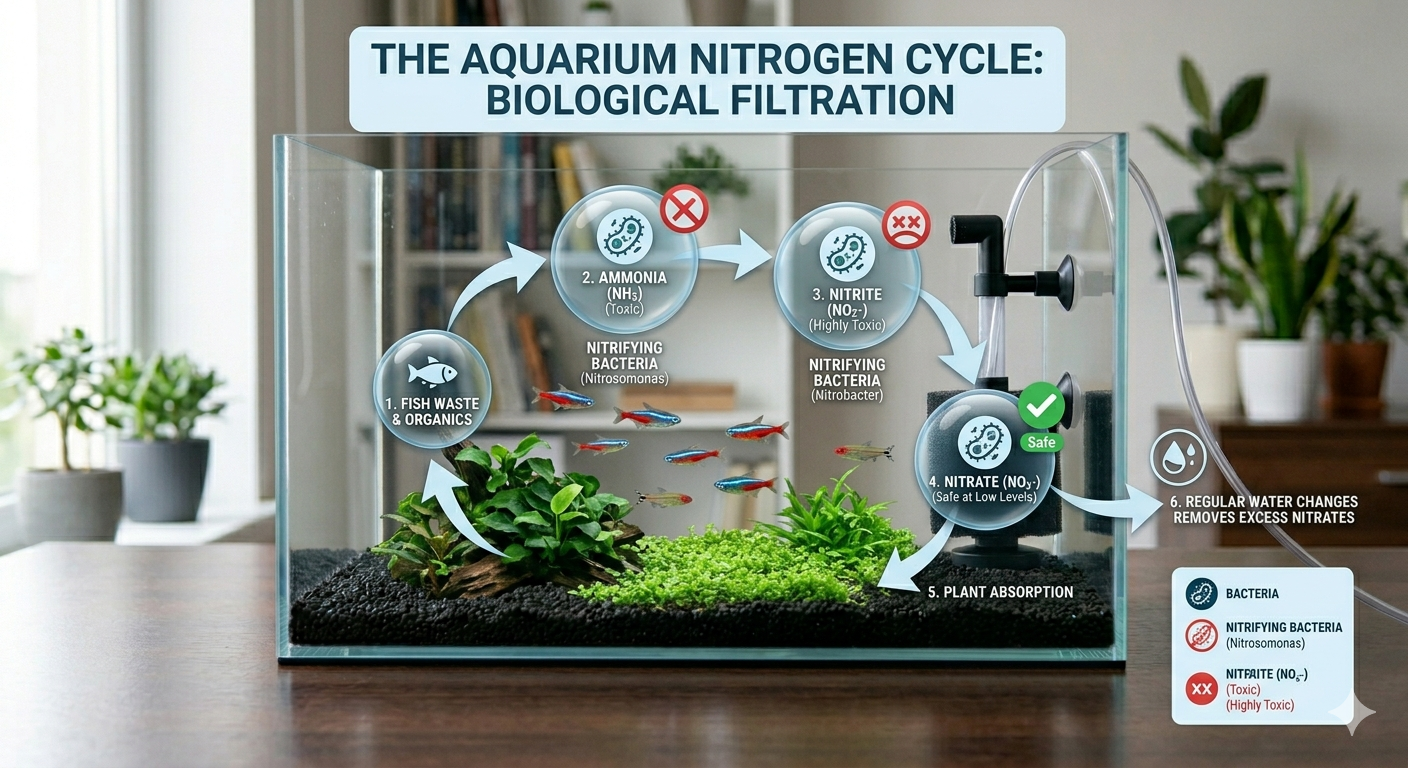
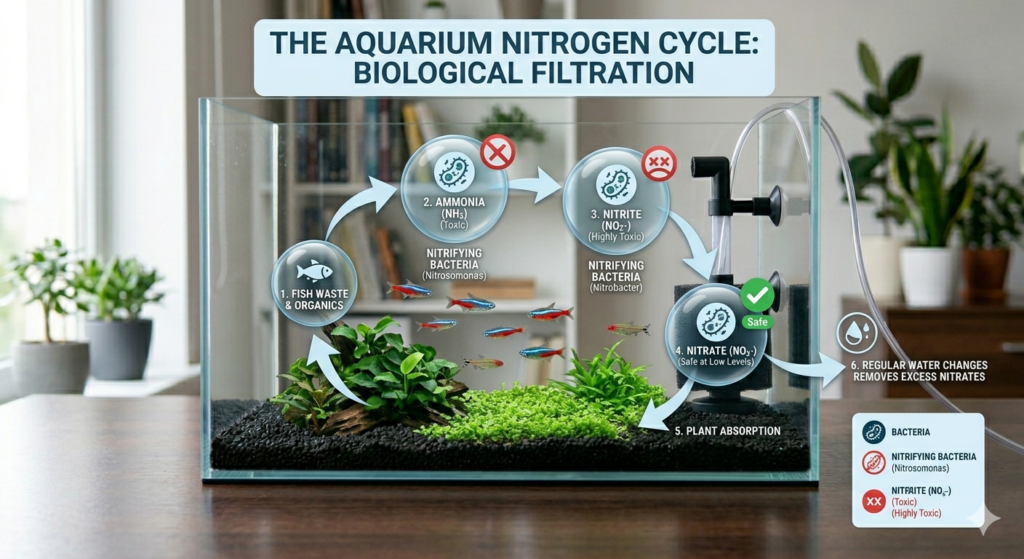
When fish produce waste, uneaten food decomposes and creates ammonia, which is toxic. Beneficial bacteria convert:

  • Ammonia → Nitrite → Nitrate

This biological process is known as the nitrogen cycle.

A properly cycled aquarium ensures:
  • Safe water conditions
  • Healthy fish
  • Stable ecosystem

⚠️ Why Cycling is Important

Skipping the cycling process is one of the most common beginner mistakes. Without cycling:

  • Ammonia levels rise quickly
  • Fish become stressed
  • Fish may die unexpectedly
  • Water becomes unstable

Cycling creates a balanced environment where fish can thrive safely.


🧪 Can You Cycle an Aquarium Without Chemicals?

Yes, absolutely. While some people use bottled bacteria or chemical additives, they are not necessary.

You can cycle your aquarium naturally using:

  • Fish food (ammonia source)
  • Time and patience
  • Beneficial bacteria growth from the environment

This method is free and beginner-friendly.


🛠️ Method 1: Fishless Cycling Using Fish Food

This is the safest and most recommended method for beginners.

Step-by-Step Process:

1. Set Up Your Aquarium

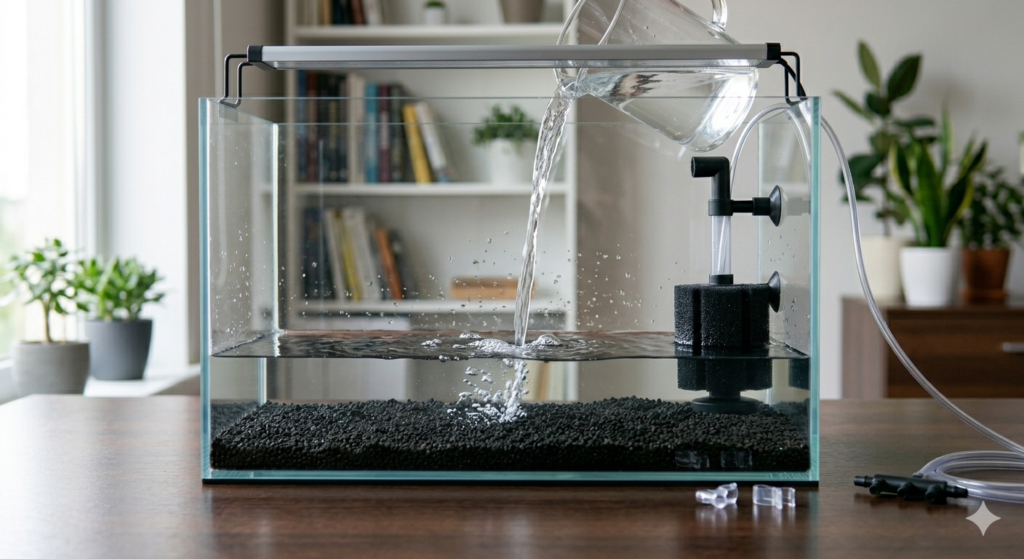
  • Add water, substrate, and filter
  • Install equipment (filter, air pump if needed)
  • Ensure everything is running properly

2. Add Fish Food as an Ammonia Source

  • Add a small pinch of fish food daily
  • Let it decompose naturally in the tank
  • This produces ammonia, which feeds beneficial bacteria

💡 You don’t need to feed fish during this process.


3. Run the Tank Continuously

  • Keep the filter running 24/7
  • Maintain stable temperature
  • Avoid cleaning the tank excessively

4. Wait for Bacteria to Grow

Beneficial bacteria will begin forming naturally in the filter and substrate.

This process typically takes:
  • 2–4 weeks for complete cycling

5. Monitor Water Conditions (Optional but Helpful)

If you have access to test kits, check:

  • Ammonia levels
  • Nitrite levels
  • Nitrate levels

During cycling:

  • Ammonia rises first
  • Then nitrite appears
  • Finally nitrate stabilizes

6. Perform Partial Water Changes (Optional)

If ammonia levels become too high:

  • Replace 20–30% of the water
  • This keeps conditions safer while cycling

🌿 Method 2: Fish-In Cycling (Less Recommended)

This method involves cycling the tank with fish already inside. It is possible but riskier.

If you choose this method:

  • Add only a few hardy fish
  • Feed lightly
  • Perform frequent water changes
  • Monitor water quality closely

⚠️ Fishless cycling is always safer because it avoids stressing or harming fish.


🧱 Where Do Beneficial Bacteria Come From?

Beneficial bacteria naturally exist in:

  • Air
  • Water
  • Gravel and decorations
  • Filter media

They will colonize your aquarium over time, especially in:

  • Sponge filters
  • Biological filter media
  • Substrate surfaces

⏳ How Long Does Aquarium Cycling Take?

The average cycling time is:

  • 2 to 6 weeks, depending on conditions

Factors that affect cycling speed:

  • Temperature
  • Oxygen levels
  • Tank size
  • Bacteria growth rate

Patience is key—rushing this process can lead to problems.


❌ Common Mistakes to Avoid

Avoid these beginner errors:

1. Adding Fish Too Early

This can expose fish to toxic ammonia.

2. Cleaning the Tank Too Often

This removes beneficial bacteria.

3. Using Tap Water Without Conditioner

Chlorine can kill bacteria and delay cycling.

4. Overfeeding Fish (in fish-in cycling)

Excess food increases ammonia levels too quickly.

🔄 Signs Your Aquarium is Fully Cycled

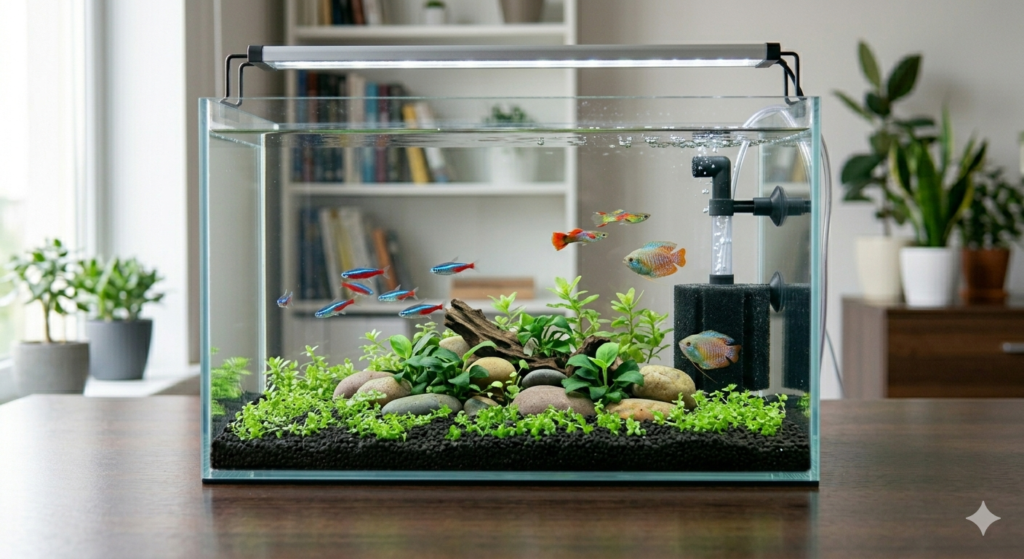
Your aquarium is ready when:

  • Ammonia = 0
  • Nitrite = 0
  • Nitrate is present but low
  • Water remains stable for several days

At this stage, your tank is safe for adding fish gradually.


🐟 Adding Fish After Cycling

Once cycling is complete:

  • Add fish slowly (2–3 at a time)
  • Avoid overstocking
  • Acclimate fish properly
  • Continue monitoring water quality

This ensures a smooth transition into a fully stocked aquarium.


💰 Benefits of Cycling Without Chemicals

Cycling naturally offers several advantages:

  • ✔ Completely free
  • ✔ Safer for beginners
  • ✔ No dependency on bottled products
  • ✔ Creates a stable long-term ecosystem

It’s a sustainable and reliable method for new aquarists.


🎯 Final Thoughts

Cycling a new aquarium is a crucial step that should never be skipped. Fortunately, you don’t need expensive chemicals or special products to do it. By using natural methods like fish food and patience, you can successfully establish a healthy biological system in your tank.

With proper cycling, your aquarium will become a safe, stable environment where your fish can thrive for years to come.

🔍 SEO Keywords (for ranking)

  • how to cycle a new aquarium
  • aquarium cycling without chemicals
  • fish tank cycling guide
  • fishless cycling aquarium
  • nitrogen cycle aquarium explained
  • beginner aquarium cycling steps

Leave a Reply

Your email address will not be published. Required fields are marked *