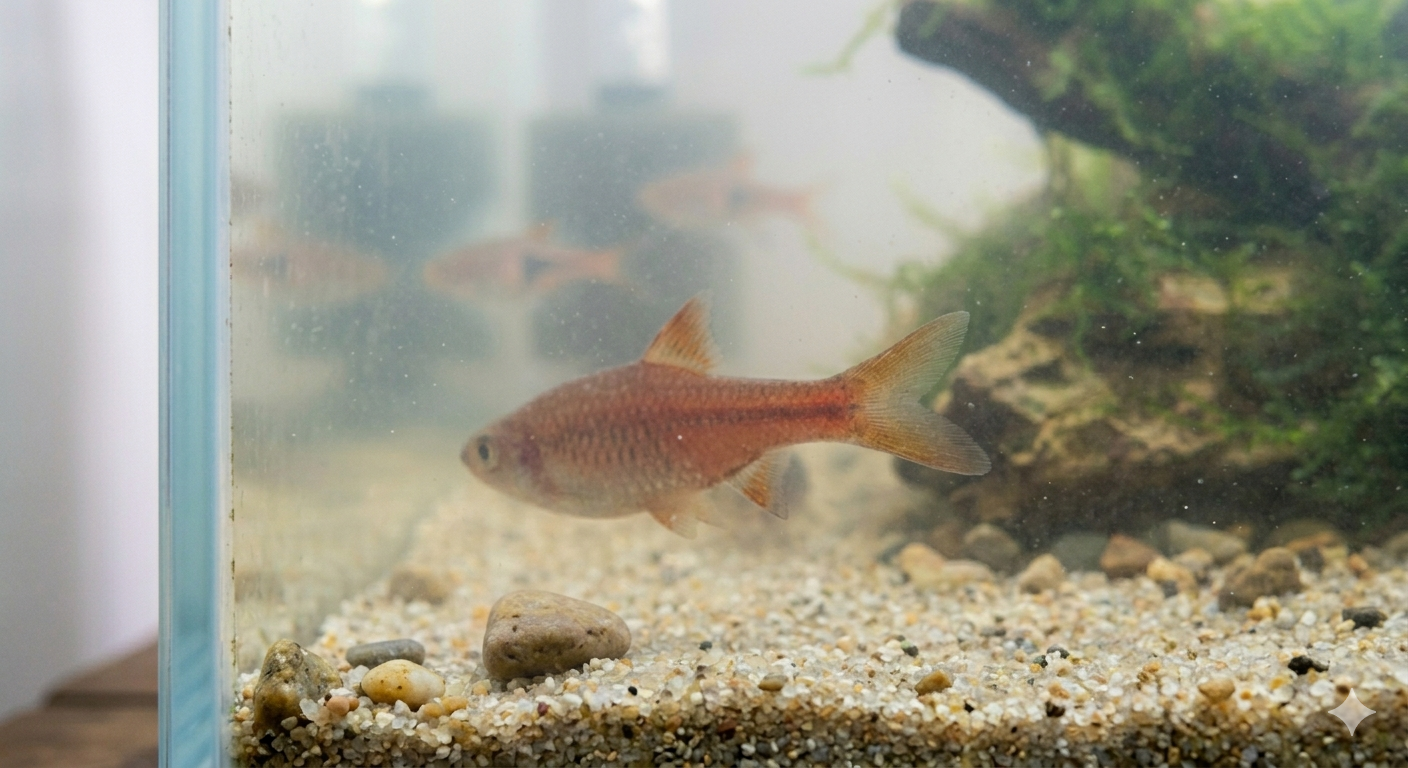
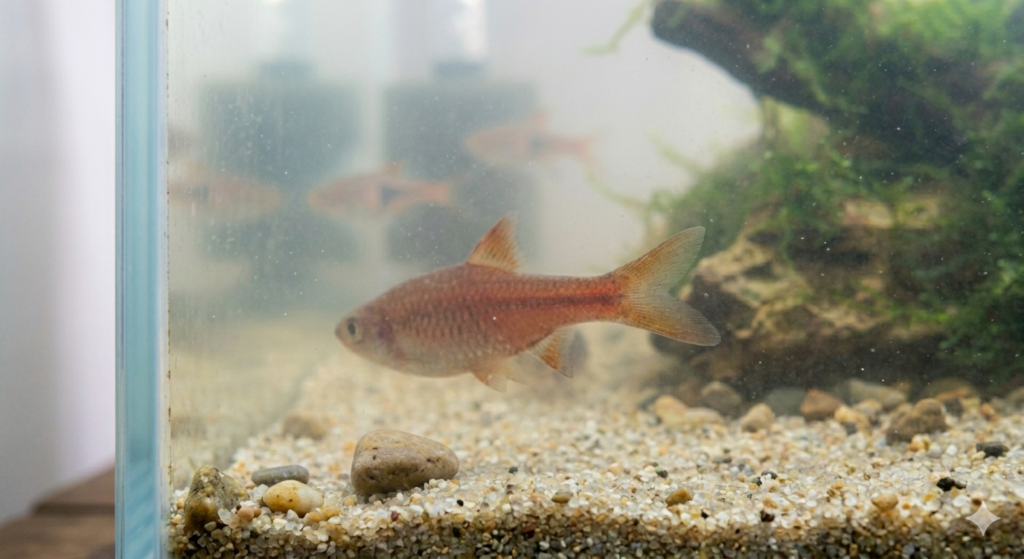
Cloudy aquarium water is one of the most common problems beginners face. It can make your tank look unattractive and may also indicate underlying issues with water quality. The good news is that most causes of cloudy water are easy to fix without spending money on expensive products.
In this SEO-optimized guide, we’ll explain why aquarium water becomes cloudy and provide free, practical fixes that actually work to restore clear water in your tank.
💡 What Does Cloudy Aquarium Water Mean?
Cloudy water is usually a sign of:
Bacterial imbalance
Excess waste or debris
Improper cycling
Overfeeding
Poor filtration
The color of the cloudiness can help identify the cause:
White/gray cloudiness → bacterial bloom or debris
Green water → algae bloom
Yellow/brown water → tannins from wood or organics
🔍 Common Causes of Cloudy Aquarium Water
1. New Tank Syndrome (Bacterial Bloom)
In newly set up aquariums, beneficial bacteria are still developing. This can cause a temporary cloudy appearance.
Why it happens:
Biological cycle not established
Ammonia buildup from waste
2. Overfeeding Fish
Excess food decomposes in the tank, increasing waste and cloudiness.
Signs:
Uneaten food on substrate
Cloudy water after feeding
Increased waste buildup
3. Poor Filtration
If your filter is too small or not functioning properly:
Waste accumulates
Water circulation is weak
Debris remains suspended
4. Dirty Substrate
Gravel or sand that hasn’t been cleaned properly can release particles into the water.
5. Overstocking
Too many fish produce excess waste, overwhelming the filtration system.
🛠️ Free Fixes That Actually Work
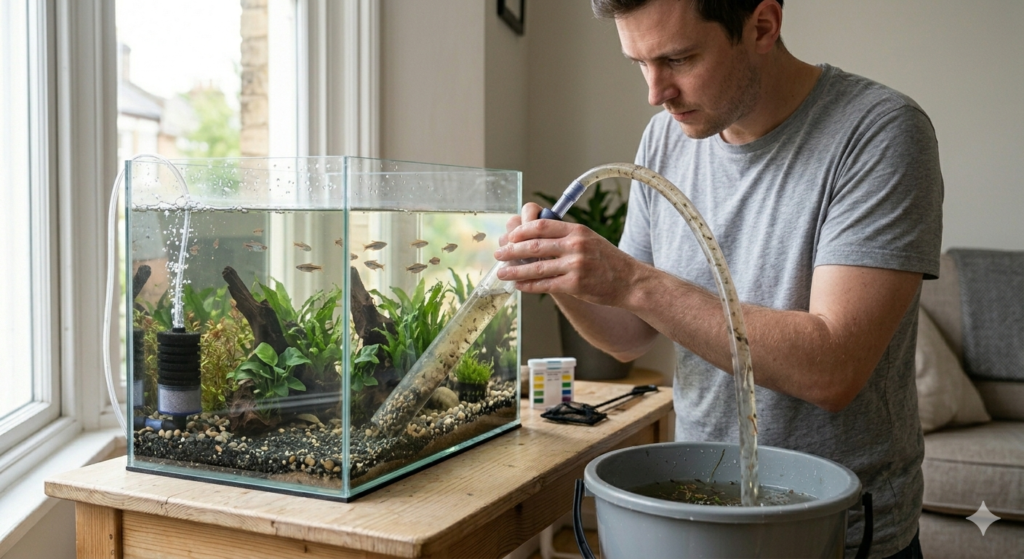
1. Perform a Partial Water Change
The simplest and most effective solution:
Replace 20–30% of the water
Use clean, dechlorinated water
Repeat regularly if needed
💡 This helps dilute waste and improve clarity quickly.
2. Reduce Feeding Amount
Feed small portions only what fish can consume in 1–2 minutes
Avoid leftover food sinking to the bottom
Skip feeding for 1 day if necessary
3. Improve Water Circulation
Adjust filter flow for better movement
Ensure water is circulating throughout the tank
Remove any blockages in the filter
4. Clean the Substrate
Use a siphon or simple tubing to remove debris
Gently clean gravel without disturbing too much at once
Avoid deep cleaning the entire substrate in one go
5. Let the Tank Cycle Naturally
If the tank is new:
Cloudiness will often clear on its own within days to weeks
Beneficial bacteria will stabilize the system
💡 Avoid over-cleaning during this phase.
6. Avoid Overcrowding
Keep fish stocking appropriate for tank size
Too many fish = too much waste
Follow general stocking guidelines for your tank volume
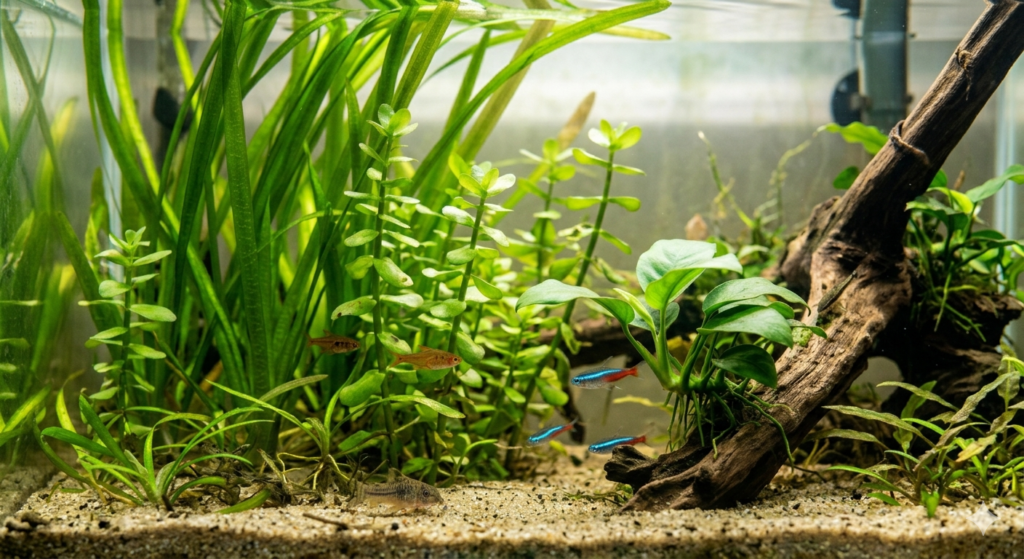
7. Add Live Plants (Natural Solution)
Live plants help by:
Absorbing nitrates
Competing with algae
Improving water balance
Easy plants like Java moss, Anubias, and Hornwort are ideal.
❌ Mistakes That Make Cloudiness Worse
Changing 100% of the water (destroys beneficial bacteria)
Over-cleaning filters too aggressively
Adding chemicals unnecessarily
Ignoring feeding habits
Using untreated or contaminated water
⏳ How Long Does Cloudy Water Take to Clear?
Minor bacterial cloudiness: 2–5 days
New tank cycling cloudiness: 1–3 weeks
Algae-related cloudiness: depends on light and nutrients
Patience and consistency are key.
🎯 Final Thoughts
Cloudy aquarium water is usually not a serious problem and can often be fixed with simple, free methods. By maintaining proper feeding habits, performing regular water changes, and ensuring good filtration, you can quickly restore clarity to your tank.
Understanding the cause is the first step—once identified, most issues can be resolved without expensive products.
 1
1